Southeast Michigan Driveway Services
Harder than limestone. Locks tighter than gravel.
Built for Michigan freeze-thaw cycles and the rural properties that
gravel keeps failing.
Serving Jackson County, Calhoun County, Hillsdale County, and Lenawee
County.
Steel slag is a byproduct of steelmaking. When iron ore, limestone, and coke are heated in blast furnaces to produce steel, impurities separate from the molten metal and rise to the surface. That material is poured off, cooled, and crushed into angular aggregate — what becomes steel slag driveway material.
The result is not rock in the traditional sense. Steel slag has a Mohs hardness rating of 6. Granite, which most people consider a hard stone, rates a 4. Limestone — the standard driveway alternative across Southeast Michigan — rates a 3. Steel slag is literally harder than both.
Hardness alone doesn't make a driveway material. What makes steel slag work is the combination of hardness and shape. The crushing process produces irregular, angular pieces with sharp edges. When those edges meet under compaction, they lock together. Unlike rounded river gravel, which rolls and shifts under load, compacted steel slag interlocks into a surface that behaves more like a bound pavement than a loose aggregate. Under vehicle weight, it consolidates further rather than spreading.
That behavior matters most in Michigan conditions. Southeast Michigan clay soil expands when wet and contracts when dry. It holds water that saturates the base of loose gravel driveways through spring thaw, turning them into mud. Michigan averages 30 to 60 freeze-thaw cycles per year — each one pushing water into voids, freezing it, expanding it, and widening whatever weakness already exists. A driveway material that compacts tightly and resists water infiltration handles those cycles better. Steel slag does both.
How Steel Slag Compares
What You Should Know Before Deciding
Steel slag outperforms limestone and gravel on most rural Southeast Michigan properties. But three things are worth knowing before you commit.
A slag driveway installed with inadequate base depth, wrong compaction equipment, or no edge management will not hold. Without edge restraints — concrete curbing, steel edging, or a solid natural border — high-traffic areas, particularly curves and turn-in points, can push material to the sides over time. The same properties that make slag excellent under straight-line traffic make it susceptible to lateral displacement if a turn is repeated daily in the same spot. Proper edge management at the time of installation prevents this. Trying to fix it later costs more than doing it right the first time.
If your estimate is based on a past limestone job, expect the tonnage for the same linear footage to be somewhat higher with slag.
For a 20-foot suburban driveway serving two cars, asphalt does the job better. Where slag wins is rural — 300-foot farm lanes, 600-foot access roads, long driveways on properties with clay soil and heavy seasonal mud, sites where construction equipment needs stable ground and asphalt isn't economical.
If your property fits that profile, steel slag is the better long-term investment. If it doesn't, we will tell you that when you call.
Right for Your Property?
A 400-foot gravel driveway that turns to mud every spring and needs regrading every two years is a recurring cost problem. Steel slag's freeze-thaw resilience and compaction stability convert that annual maintenance budget into a one-time installation investment with a 10 to 15-year service life.
Farm equipment is heavy. Tractors, combines, and grain wagons generate the kind of repeated heavy load that breaks down limestone and scatters gravel. Steel slag's load-bearing density handles agricultural traffic without the rutting and softening that makes standard gravel unreliable at critical times — planting and harvest, when weather conditions are already working against you.
Construction sites, property developments, and any project requiring heavy equipment access need a stable surface that doesn't fail when a loaded concrete truck or excavator makes repeated passes. Steel slag provides that base without the cost of temporary asphalt millings or the cleanup headache of failed gravel.
Business properties, farm operations, and any site with regular vehicle traffic across unpaved surfaces benefit from slag's superior compaction. It handles the load without the dust, mud, and regrading that make gravel parking areas an ongoing operational inconvenience.
Why Michigan Specifically
Southeast Michigan's soil is predominantly clay-heavy, particularly across Jackson, Calhoun, Hillsdale, and Lenawee counties. Clay soil absorbs water, expands, heaves against whatever sits on top of it, and stays saturated long after a rain event. It is the single biggest reason standard gravel driveways in this region fail faster than manufacturer claims suggest they should.
Michigan also has terrain that works against loose aggregates. The freeze-thaw cycle in southern Lower Michigan runs 30 to 60 full cycles per year. Each cycle is a stress event for any driveway surface. Water infiltrates voids during the thaw phase, freezes and expands during the cold phase, and pries those voids wider each time. A material that compacts densely enough to minimize water infiltration in the first place weathers those cycles better.
Steel slag was originally produced at steel mills across the Midwest and Great Lakes region — a geography that includes Michigan. It is familiar material to contractors who have worked in this region for decades. It is not a trendy alternative; it is an industrial byproduct that Michigan properties have used for farm lanes and rural access roads for generations. The difference now is that more homeowners know it exists.
Long Haul Dumpsters operates out of Horton, MI in Jackson County. Every property in our 25-city service area — across four counties and hundreds of rural addresses — is within range for steel slag delivery and installation consultation.
How It Works
Call 517-960-9232 and describe your property — driveway length, current surface condition, soil type if known, and what load it needs to support. We will determine whether steel slag is the right material and give you a realistic picture of the project before any commitment.
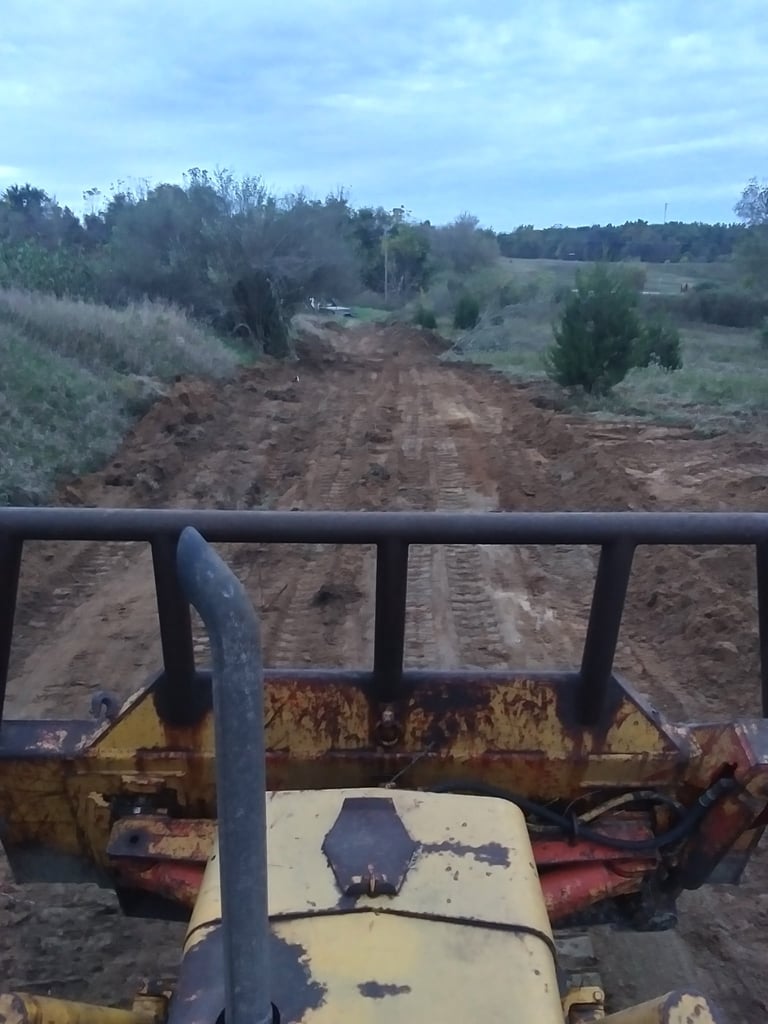
A proper slag driveway starts with the right base. We excavate to the planned depth — typically 8 to 12 inches for residential driveways — grade for drainage, and establish the subbase layer. Skipping base depth to save money on installation is the single most common reason slag driveways underperform.
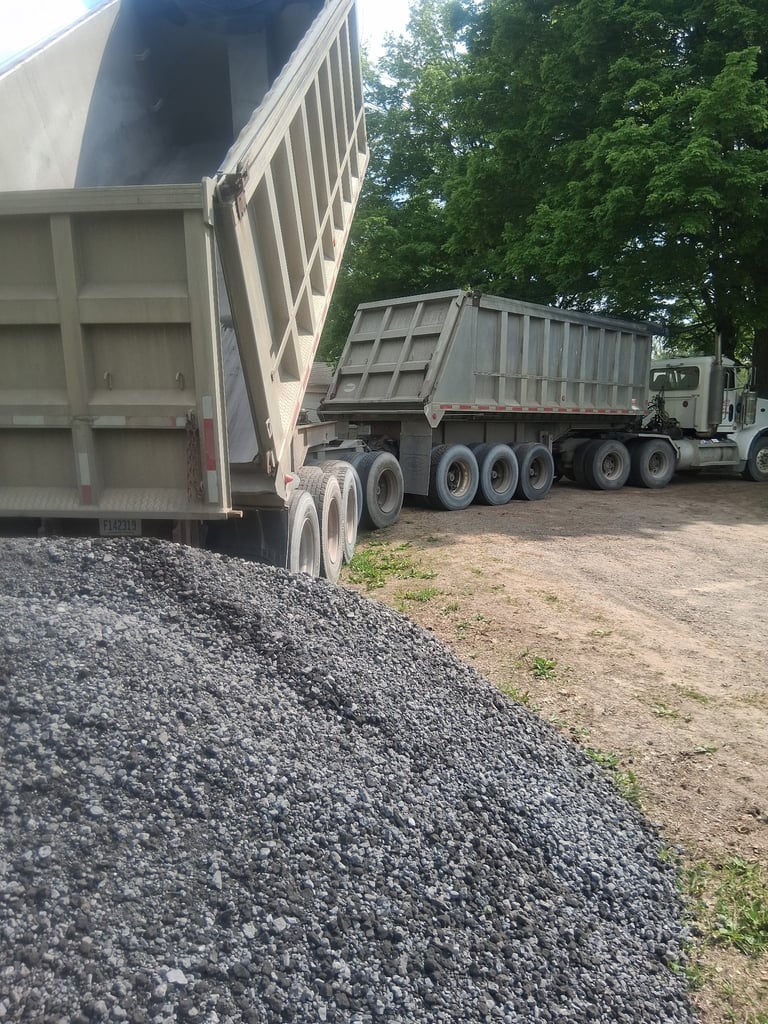
Steel slag is delivered and spread in compacted lifts. Each layer is compacted before the next goes down. Edge restraints are installed at all lateral boundaries and high-traffic turn points to prevent material migration. Final grade is set for water runoff.
Allow 24 to 48 hours before heavy vehicle traffic. Light foot traffic is fine immediately. The material continues to consolidate with early traffic — the first few weeks of normal use actually improve surface performance as the angular particles interlock further under load.
Steel Slag Driveway Questions
Steel slag driveways for Southeast Michigan properties.
Farm lanes, rural driveways, site access roads. Built to last Michigan
winters.
Call Mike at Long Haul Dumpsters.